
Key Takeaways
- Burglary in Utah involves unlawfully entering or remaining in a building with the intent to commit a felony, theft, assault, or specific sexual crimes, distinct from simple theft.
- Charges range from third-degree to first-degree felonies, with aggravated burglary carrying the most serious penalties under Utah law.
- Possible defenses may include lack of intent, mistaken identity, lawful entry, insufficient evidence, or constitutional violations involving searches or arrests.
- Early legal representation may affect plea negotiations, potential charge reductions, and the review of constitutional issues in the case.
- If charged, avoid speaking with law enforcement without legal counsel and preserve any information related to the case.
A burglary charge in Utah is a serious criminal allegation that can carry significant legal consequences. Unlike simple theft, burglary is treated as a felony offense. A conviction may include prison sentences, financial penalties, and a felony record that can affect employment, housing, and other opportunities. Understanding how burglary is charged in Utah and the defenses that may apply is an important first step in evaluating your legal situation.
Anyone facing this type of charge should take the situation seriously and seek legal guidance. The complexities of Utah’s legal system require skilled navigation, and an experienced criminal defense attorney can provide the guidance and advocacy necessary to challenge the prosecution’s case.
What Qualifies as Burglary in Utah?
In Utah, the legal definition of burglary is often misunderstood. The offense centers on unlawfully entering or remaining in a building with the intent to commit another crime. According to Utah Code 76-6-202, a person is guilty of burglary if they enter or remain unlawfully in a building with the intent to commit a felony, theft, assault, or other specified crimes inside. This distinction is crucial. While many burglary cases involve allegations of theft, the prosecutor’s primary burden is to prove that the unlawful entry was paired with the intent to commit a separate crime.
This separates burglary from other property crimes. For instance, theft is the act of unlawfully taking another’s property, which can occur anywhere, while burglary is tied to the act of entering a structure. Similarly, robbery involves taking property directly from a person through force or fear, making it one of the more serious violent crimes.
The severity of a burglary charge in Utah often depends on the type of building involved. A burglary committed in a dwelling, meaning a place where a person resides, is charged as a second-degree felony. In contrast, the burglary of a commercial building, such as a store or office, is typically charged as a third-degree felony.
Understanding Unlawful Entry and Intent
The concept of unlawful entry under Utah burglary law includes more than forced entry. The offense does not require breaking a door or window. Entering through an unlocked door or entering an area of a building that is not open to the public without permission may qualify as unlawful entry. A person may also face burglary charges if they lawfully enter a building but later remain there with the intent to commit a crime.
The most critical element for the prosecution to prove is intent. The state must demonstrate beyond a reasonable doubt that at the moment of unlawful entry, the defendant had the specific intent to commit a felony, theft, or assault inside. If the intent to commit a crime was formed only after entering the building, or if there was no criminal intent at all, a burglary charge may not be sustainable.
Aggravated Burglary in Utah: Enhanced Penalties
A standard burglary charge can be escalated to aggravated burglary, a first-degree felony, under specific circumstances outlined in Utah law. This is the most serious form of burglary and carries severe penalties, including the possibility of life in prison. An aggravated burglary charge arises if, during the commission of the burglary, the attempt, or the immediate flight from the scene, the individual or another participant in the crime:
- Causes bodily injury to anyone who is not a participant.
- Uses or threatens the immediate use of a dangerous weapon.
- Possesses or attempts to use any explosive or dangerous weapon.
The presence of any of these factors transforms the offense, placing it among the most severe crimes in the Utah criminal code. The prosecution does not need to prove that the weapon was actually used, only that it was possessed or its use was threatened. These circumstances increase the severity of the charge because they involve violence or the threat of violence.
Penalties for Burglary in Utah
A conviction for burglary in Utah results in a felony record and significant legal consequences that vary by degree. Utah law establishes sentencing ranges that courts consider when imposing penalties.
- Third-Degree Felony: This is the standard charge for the burglary of a non-residential building. A conviction can lead to a sentence of up to five years in prison and a fine of up to $5,000.
- Second-Degree Felony: When a burglary involves a dwelling, the charge is elevated to a second-degree felony. The potential penalty increases significantly to a term of one to 15 years in prison and a fine of up to $10,000.
- First-Degree Felony (Aggravated Burglary): As the most serious charge, aggravated burglary carries a potential prison sentence of five years to life and a fine of up to $10,000.
A felony conviction can have long-term consequences beyond the court sentence. It creates a permanent criminal record that may affect employment opportunities, housing applications, professional licensing, and firearm ownership. In some cases, a felony 402 reduction may later allow the offense level to be lowered. An attorney can also review whether the conviction may qualify for criminal record expungement in the future.
Common Defense Strategies Against Burglary Charges
An accusation is not a conviction. A burglary defense lawyer in Utah can review the evidence and evaluate possible legal defenses based on the facts of the case. Several strategies can be employed to challenge burglary charges. Legal counsel reviews the evidence, challenges the prosecution’s case, and raises applicable legal defenses.
Common defenses include:
- Lack of Intent: Arguing that the prosecution cannot prove you intended to commit a crime at the time of entry.
- Mistaken Identity: Presenting evidence that you were not the person who committed the offense, such as through alibis or witness testimony.
- Consent to Enter: Demonstrating that you had permission or lawful authority to be on the property negates the “unlawful entry” element.
- Insufficient Evidence: Challenging the strength and reliability of the prosecution’s evidence, arguing it does not meet the standard of “beyond a reasonable doubt.”
- Constitutional Violations: Filing motions to suppress evidence obtained through an illegal search and seizure or an unlawful arrest. This could stem from an issue with the initial stop or an improperly executed arrest warrant.
Challenging the Element of Intent
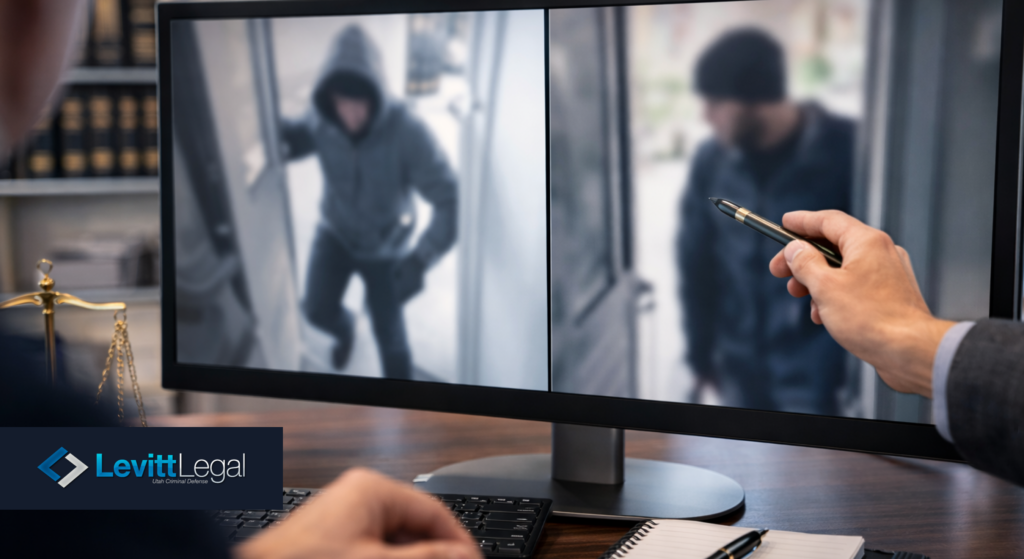
A common defense in burglary cases involves challenging the element of intent. The prosecution must prove that the defendant intended to commit a crime at the time of entry. If a person entered a building for a noncriminal reason, such as seeking shelter or because of confusion or intoxication, and only later decided to take property, the elements of burglary may not be satisfied. A defense attorney may review witness statements, surveillance footage, and other evidence to argue that the required intent did not exist at the time of entry.
Can Burglary Charges Be Reduced or Dismissed in Utah?
In some cases, burglary charges may be reduced or dismissed depending on the facts and available evidence. An experienced attorney can negotiate with prosecutors to achieve a more favorable outcome through a plea agreement. These agreements are a cornerstone of the criminal justice system, where a defendant may agree to plead guilty to a lesser charge in exchange for concessions from the prosecution.
For example, a felony burglary charge might be reduced to a misdemeanor offense like criminal trespass, which carries far less severe penalties. The possibility of a charge reduction depends on several factors, including the strength of the evidence, the defendant’s criminal history, and the specific circumstances of the case. For first-time offenders, prosecutors may be more willing to consider alternative resolutions that avoid a felony conviction. Attorneys may present mitigating factors, such as cooperation or personal circumstances, when negotiating with prosecutors.
What to Do Immediately After Being Charged with Burglary
The period immediately following an arrest or criminal charge can affect how a case develops. Statements made to law enforcement may later be used in court, so it is generally advisable to avoid answering questions without legal counsel present. Preserving any information related to the case, including text messages, digital records, or physical evidence, may also be important.
Individuals facing burglary charges should avoid contacting alleged victims or witnesses, as this may create additional legal complications. Consulting a criminal defense attorney early allows the case to be reviewed, evidence to be evaluated, and communication with prosecutors to be handled through legal counsel. If you are facing burglary charges in Utah, contact Levitt Legal can review the circumstances of your case and discuss the legal options available.
Frequently Asked Questions
What is the primary difference between burglary and theft in Utah?
In Utah, burglary involves unlawfully entering or remaining in a building with the intent to commit a crime inside, which can be a felony, theft, or assault. Theft, on the other hand, specifically refers to the unlawful taking of another’s property with the intent to permanently deprive them of it, and does not necessarily require unlawful entry into a building.
What are the potential felony degrees for burglary charges in Utah?
Burglary in Utah can be charged as a third-degree felony (general circumstances), a second-degree felony (if committed in a dwelling), or a first-degree felony (for aggravated burglary, which involves injury, a dangerous weapon, or explosives).
How does “intent to commit a crime” factor into a Utah burglary charge?
The prosecution must prove beyond a reasonable doubt that you had the specific intent to commit a felony, theft, assault, or specific sexual crimes at the moment you unlawfully entered or remained in a building. If this intent cannot be proven, or if it was formed after a lawful entry, it can be a strong defense.
Can a first-time offender get probation instead of jail time for a Utah burglary conviction?
While burglary is a serious felony, a first-time offender may be eligible for probation, plea bargains, or alternative sentencing, depending on the specifics of the case and the legal strategy employed. An experienced attorney can advocate for more lenient outcomes.
Why is hiring a Salt Lake City burglary attorney immediately important?
Immediate legal intervention by an experienced attorney allows for the preservation of crucial evidence, protects your constitutional rights against self-incrimination or unlawful searches, and enables the development of a strong defense strategy from the outset, potentially leading to reduced charges or even dismissal.