
Key Takeaways
- The legal distinction between possession and intent to distribute is crucial in Utah drug cases.
- Prosecutorial evidence differs significantly for possession versus distribution charges.
- Strategic defenses, from challenging evidence to proving personal use, are vital for both.
- Utah-specific enforcement patterns and county-level nuances impact case outcomes.
- Early engagement with an experienced drug crimes attorney can lead to charge reductions and better results.
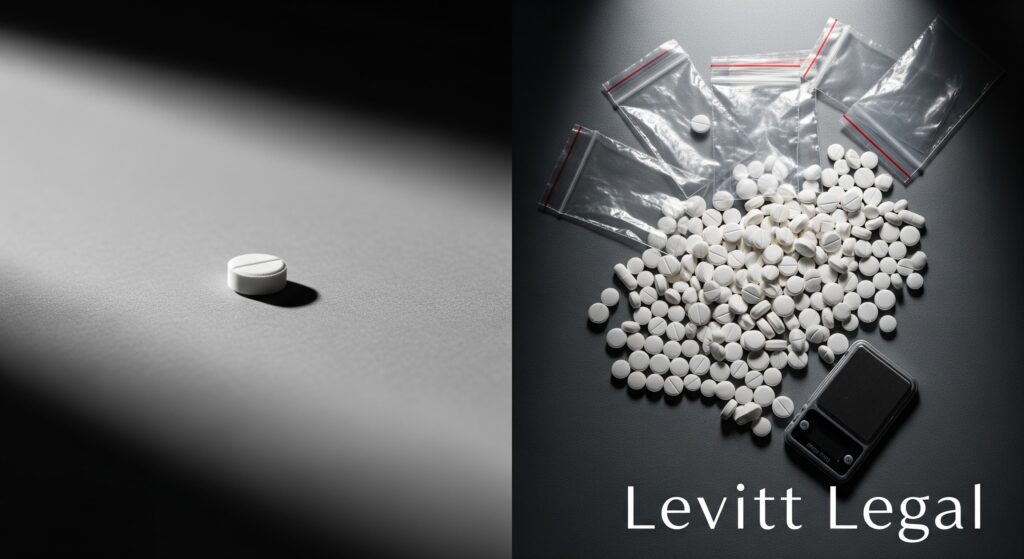
Understanding the Critical Difference Between Drug Possession and Distribution in Utah
When you are facing drug charges in Utah, the specific allegation—whether it’s simple possession or distribution—will fundamentally shape your case and the defense strategies available to you. The line between these offenses can seem thin, but the legal consequences are vastly different. Understanding these distinctions is the first step toward building a strong defense and protecting your future. An attorney providing comprehensive Utah drug crimes defense will focus on the specific elements the prosecution must prove for each charge.
Simple Drug Possession: What It Means Under Utah Law
Simple drug possession means having a controlled substance for your own personal use. The prosecution does not need to prove that you intended to sell or share the drugs, only that you knowingly and intentionally had control over them. This could mean the drugs were found on your person, in your car, or in your home. While still a serious offense, the penalties for simple possession are generally less severe than those for distribution.
Possession with Intent to Distribute: Defining the Crucial Elements
Possession with Intent to Distribute (PWID) is a more serious felony charge that acts as a bridge between simple possession and actual distribution. To secure a PWID conviction, a prosecutor must prove not only that you possessed the substance but also that you had the specific intent to sell, deliver, or otherwise transfer it to another person. This “intent” is often inferred from circumstantial evidence, which is where many legal battles are fought.
Drug Distribution and Trafficking: Utah’s Legal Framework and Penalties
Drug distribution and trafficking are the most severe drug offenses under Utah law. Distribution involves the actual sale, delivery, or transfer of a controlled substance. Trafficking often refers to the transportation of large quantities of drugs across state lines or within Utah. These charges carry mandatory minimum sentences, substantial fines, and the potential for a long prison term. The stakes are incredibly high, making an aggressive defense essential.
How Utah Prosecutors Build a Case for Drug Possession Charges
For a simple possession charge, prosecutors rely on straightforward evidence to establish that you had knowledge of and control over the illicit substance. Their case often rests on a few key pieces of evidence.
Direct Evidence: Drugs on the Person or in Proximity
The most common evidence is the discovery of drugs in your pocket, backpack, or in the immediate vicinity, such as the center console or glove box of your vehicle. This is known as “actual possession” and is the easiest for the state to prove.
The Legal Theory of Constructive Possession in Utah
When drugs are not found directly on you, prosecutors may use the theory of constructive possession. This legal concept means you had knowledge of the drugs’ presence and the ability and intent to control them, even if they were in a shared space like an apartment or a car’s trunk. Proving constructive possession can be complex, especially if multiple people had access to the area.
Accused Statements and Drug Paraphernalia Found at the Scene
Any statements you make to law enforcement can be used against you. Admitting the drugs are yours, for example, can solidify the prosecution’s case. The presence of paraphernalia like pipes or syringes also serves as strong corroborating evidence for a possession charge.
Effective Defense Strategies for Drug Possession Charges in Utah
A skilled drug possession defense attorney will meticulously examine the prosecution’s evidence to find weaknesses. Several key strategies can be employed.
Challenging Actual or Constructive Possession and Knowledge
The defense can argue that you did not knowingly possess the substance. Perhaps you borrowed a friend’s jacket or were a passenger in a car and were unaware of the drugs’ presence. For constructive possession, your attorney can demonstrate that others had equal or greater access to the location where the drugs were found.
Illegal Search and Seizure: Protecting Your Fourth Amendment Rights
The Fourth Amendment protects you from unreasonable searches and seizures. If law enforcement found the drugs by searching you, your vehicle, or your home without a valid warrant or probable cause, your attorney can file a motion to suppress the evidence. If successful, the illegally obtained evidence cannot be used against you, often leading to a dismissal of the charges.
Medical Prescriptions and Other Legitimate Defenses
For prescription drug charges, a valid prescription in your name is a complete defense. In other cases, you may have a legitimate reason for possessing certain items that police mistake for controlled substances.
Contamination and Chain of Custody Issues with Evidence
Your attorney will scrutinize the handling of the evidence from the moment it was seized. Any break in the chain of custody or evidence of contamination at the crime lab can be used to challenge its admissibility in court.
How Utah Prosecutors Build a Case for Drug Distribution Charges
To elevate a case from possession to distribution, prosecutors must present evidence that points toward commercial activity rather than personal use.
Large Quantity of Drugs and Specialized Packaging Materials
One of the primary indicators of intent to distribute is possessing a quantity of drugs larger than what is typical for personal use. The presence of packaging materials, such as numerous small baggies, also strongly suggests the drugs were being divided for sale.
Scales, Transaction Ledgers, and Other Distribution Paraphernalia
Finding digital scales, owe sheets, or ledgers that track sales can be powerful evidence for the prosecution. This type of paraphernalia directly supports the argument that you were engaged in a drug-selling operation, which may also lead to Asset Forfeiture and Seizure in Utah.
Surveillance Evidence and Digital Communications (Text Messages)
Police may use surveillance to observe suspected drug transactions. They will also seek warrants to search your phone for text messages, social media chats, or app communications that contain language about prices, quantities, or meeting locations.
Strategic Defenses for Drug Distribution and Intent to Distribute Charges in Utah
Defending against distribution charges requires a proactive and aggressive strategy aimed at dismantling the prosecution’s narrative of intent.
Proving Drugs Were for Personal Use Only, Not Distribution
The cornerstone of many distribution defenses is arguing that the drugs were for personal consumption. An attorney can present evidence of a heavy drug habit to explain a larger quantity or argue that you bought in bulk to save money, not to sell.
Challenging the Interpretation of Text Messages and Digital Evidence
Language used in text messages is often ambiguous and full of slang. A skilled attorney can provide alternative, innocent interpretations of conversations that police believe are related to drug sales, creating reasonable doubt.
Attacking the Reliability and Credibility of Confidential Informants
Many distribution cases are built on the testimony of confidential informants (CIs), who may be unreliable or motivated by a desire to get a lighter sentence for their own crimes. Your defense can challenge the CI’s credibility and expose their motives to the court.
Suppressing Evidence from Illegal Searches and Seizures
Just as in possession cases, the Fourth Amendment is a powerful shield. If police overstepped their authority in searching for evidence of distribution, that evidence can be suppressed.
Challenging Constructive Possession of Distribution-Related Materials
If scales, baggies, or ledgers were found in a shared space, the defense can argue you had no knowledge or control over them, applying the same constructive possession principles used in simple possession cases.
Key Differences in Evidence Interpretation: Possession vs. Distribution Cases
The same piece of evidence can be viewed very differently depending on the charge. A skilled defense attorney knows how to reframe the evidence to support a narrative of personal use over distribution.
Quantity as an Indicator: Not Always Conclusive Proof of Distribution
Prosecutors often treat quantity as definitive proof of intent to distribute. However, the defense can argue that what seems like a large amount to law enforcement may be a normal amount for a person with a high tolerance or a long-term addiction.
How Defense Attorneys Reinterpret Digital Evidence (Texts, Apps)
An attorney can dismantle the prosecution’s interpretation of digital evidence by showing the context of conversations, explaining slang, or demonstrating that the discussions were about something else entirely.
Examples of Distribution Charges Being Reduced in Utah Cases
An experienced attorney like Darren Levitt can often negotiate with prosecutors to get distribution charges reduced to simple possession by highlighting weaknesses in the evidence of intent. This can result in significantly reduced penalties and may preserve pathways to later expunging a criminal record in Utah.
Utah-Specific Drug Crime Considerations and Enforcement Trends
Understanding the local legal landscape is critical. Drug enforcement and prosecution vary significantly across Utah.
Enforcement Patterns of Utah Highway Patrol and Interstate Drug Interdiction
The Utah Highway Patrol aggressively patrols major corridors like I-15, I-80, and I-70, looking for vehicles to stop for minor traffic infractions as a pretext to investigate for drug trafficking. These “interdiction” stops have specific legal rules that a defense attorney can challenge.
County-Level Prosecution Differences in Salt Lake, Utah, Davis, and Weber Counties
How your case is handled can depend heavily on the county. Prosecutors in Salt Lake County may have different priorities and plea bargain policies than those in Utah County, Davis County, Weber County, Summit County, or Tooele County. An attorney familiar with these local nuances can provide a significant advantage.
Trends in Plea Negotiations for Distribution vs. Possession Charges in Utah
Local prosecutors have varying degrees of flexibility in plea negotiations. An attorney who regularly practices in these courts will know which arguments are most effective in convincing a prosecutor to reduce a distribution charge to simple possession.
When an Experienced Lawyer Can Get Utah Distribution Charges Reduced
Early intervention by a skilled drug crimes lawyer is the most effective way to fight for a charge reduction or dismissal.
Presenting Mitigating Evidence and Arguing Lack of Intent
Your attorney can gather and present mitigating evidence—such as proof of addiction, lack of a prior criminal record, or community ties—to show prosecutors that you are not a drug trafficker and that a lesser charge is more appropriate.
Highlighting Problems with Informant Testimony and Police Procedures
A thorough investigation by your defense team can uncover inconsistencies in police reports, procedural errors during your arrest, or reasons to doubt the credibility of an informant, all of which can be used as leverage in negotiations.
Demonstrating Personal Use Patterns and Context to Prosecutors
By presenting a complete picture of who you are and the context surrounding the alleged offense, your attorney can effectively argue that the evidence points to a substance abuse problem, not a criminal enterprise.
When to Contact a Utah Drug Crimes Attorney
The moment you are arrested, become aware of an investigation, or have your property seized is the moment you need to contact an attorney. It is critical that you know what to do if you’re involved in a drug crime. Do not speak to the police or answer any questions until you have legal representation. Early engagement allows your lawyer to protect your rights, manage communications with law enforcement, and begin building a defense strategy from the very beginning. Whether you are facing a misdemeanor possession charge or a first-degree felony distribution charge, the right legal guidance can make all the difference. To begin protecting your rights, contact Levitt Legal immediately.
Don’t Face Utah Drug Charges Alone: Get Expert Legal Guidance
The complexities of drug possession and distribution charges demand an experienced legal defense. If you’re facing allegations in Salt Lake County or anywhere in Utah, protect your rights and future. Contact Levitt Legal for a Free Case Review today.
FAQs
What is the difference between drug possession and distribution in Utah?
Answer: In Utah, drug possession typically refers to having illegal drugs for personal use, often carrying lighter penalties. Distribution, or intent to distribute, involves possessing drugs with the purpose of selling or transferring them, usually evidenced by quantity, packaging, or communication, and often leads to significantly harsher felony charges.
Can distribution charges be reduced to possession in Utah?
Answer: Yes, it is often possible to get distribution charges reduced to simple possession in Utah. An experienced defense attorney can achieve this by challenging the prosecutor’s evidence of intent, demonstrating the drugs were for personal use, or highlighting issues with search warrants or informant testimony.
What evidence is used to prove intent to distribute in Utah?
Answer: Prosecutors typically rely on evidence such as large quantities of drugs, drug packaging materials, scales, transaction ledgers, surveillance footage, and text messages or digital communications that suggest selling or transferring.
How do lawyers fight constructive possession in Utah drug cases?
Answer: Lawyers fight constructive possession by demonstrating that the accused did not have knowledge of the drugs or sufficient dominion and control over them. This could involve showing the drugs belonged to another person, were in an area accessible to multiple individuals, or that the accused had no reasonable opportunity to discover their presence.
Can text messages alone prove drug distribution in Utah?
Answer: While text messages can be strong evidence, they rarely prove distribution alone. An attorney can challenge their interpretation, argue they are out of context, or present alternative explanations, often requiring additional corroborating evidence from the prosecution for a conviction.