
Key Takeaways
- A DUI arrest in Utah immediately threatens your driver’s license under the state’s administrative per se process.
- You have a strict 10-day deadline from the date of your arrest to request a Driver License Division (DLD) hearing to contest the suspension.
- The DLD hearing is separate from your criminal court case and focuses solely on the administrative suspension of your driving privileges.
- An experienced Utah DUI attorney can challenge the license suspension by questioning reasonable suspicion for the stop, probable cause for arrest, and the accuracy of chemical tests or implied consent warnings.
- Acting quickly and seeking legal counsel is critical to maximize your chances of protecting your driving privileges and coordinating a comprehensive defense.
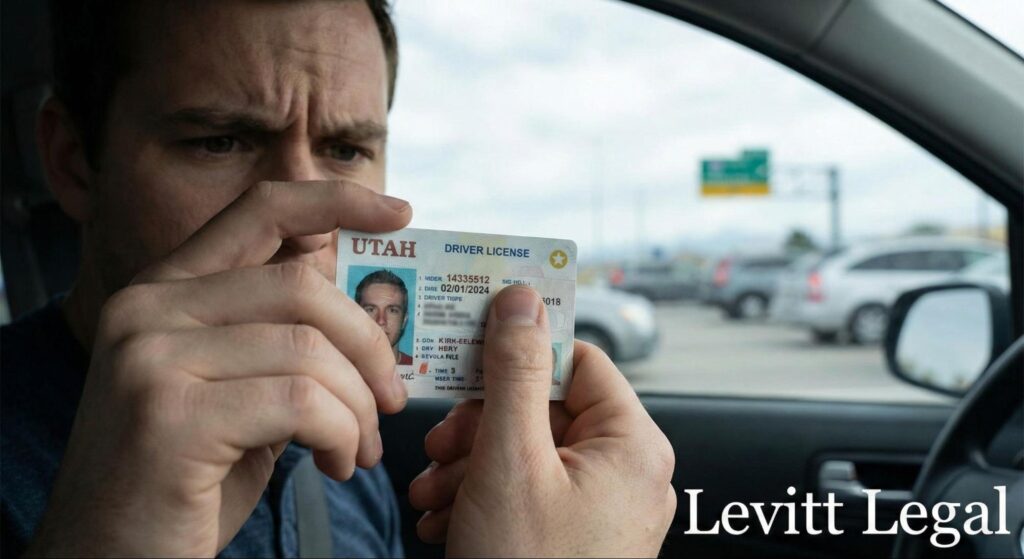
Understanding the Immediate Threat to Your Utah Driver’s License
An arrest for driving under the influence (DUI) in Utah sets in motion two separate and distinct legal processes. While most people are aware of the criminal case that will proceed through the court system, many are caught off guard by the immediate administrative action taken against their driver’s license. This process is initiated by the Utah Driver License Division (DLD) and operates independently of your criminal charges.
Immediately following a DUI arrest where a chemical test shows a blood alcohol content (BAC) of 0.05% or higher, or if you refuse testing, the arresting officer will typically confiscate your physical driver’s license. They will then issue a temporary driving permit, which is often included with the citation. This temporary license is valid for a limited time, and understanding this dual-track system is the first step in formulating an effective defense. The administrative process, governed by the DLD, is swift and has its own rules and deadlines to quickly remove potentially impaired drivers from the road. It is crucial to recognize that even if your criminal charges are eventually reduced or dismissed, you could still lose your license through this separate administrative action.
Utah’s Administrative Per Se Law Explained
Utah operates under an “administrative per se” law. This means that your license can be suspended automatically, or “per se,” based solely on the fact of your arrest for DUI with a BAC at or above the legal limit. This action is administrative, not criminal, and the standard of proof is lower than in a criminal court.
This law is tied to the doctrine of “implied consent.” By obtaining and using a Utah driver’s license, you have legally consented to submit to a chemical test (breath, blood, or urine) if a peace officer has reasonable grounds to believe you are driving under the influence. Refusing to take this test constitutes a violation of the implied consent law and triggers its own severe penalties, including a potentially longer license suspension than one for a failed test. The administrative per se law empowers the DLD to act swiftly, making your proactive defense in the days immediately following your arrest absolutely critical.
The Critical 10-Day Deadline for Your DLD Hearing
The single most important takeaway following a DUI arrest is the timeline: you have only ten calendar days from the date of your arrest to formally request a hearing with the Driver’s License Division. This is a strict and unforgiving deadline.
If you fail to submit a written request for this administrative hearing within the 10-day window, you forfeit your right to challenge the suspension. Consequently, your driver’s license will be automatically suspended on the date specified by the DLD, typically 30 days after the arrest. There are no extensions. This tight timeframe underscores the urgency of seeking immediate professional legal guidance. An experienced Utah DUI lawyer can ensure the hearing request is filed correctly and on time, preserving your opportunity to fight for your driving privileges. This first step is non-negotiable and serves as the foundation for any strategy to protect your license.
Navigating the Utah DLD Hearing Process
The DLD hearing is an administrative proceeding, not a criminal trial. It is a formal evidentiary hearing often conducted by a hearing officer appointed by the DLD. The scope of this hearing is narrow and specifically focused on the circumstances of your DUI stop and arrest as they pertain to your driving privileges. It is entirely separate from the DUI defense strategies you will employ in your criminal case.
During the hearing, the officer who arrested you will typically provide testimony about the incident. Your attorney will have the opportunity to cross-examine the officer, challenge the evidence presented, and introduce your own evidence and witnesses. The goal is to demonstrate that the suspension of your license is not warranted based on the specific legal standards the DLD must follow. The outcome of this hearing directly determines the status of your license, but does not determine guilt or innocence on the criminal charge.
What the DLD Hearing Officer Considers
The hearing officer is tasked with reviewing a specific set of facts to make a determination. Their review is not as broad as a criminal court’s. They will primarily consider the following points:
- Reasonable Suspicion: Did the peace officer have a valid, articulable reason to pull your vehicle over in the first place?
- Probable Cause: Were there sufficient grounds for the officer to believe you were driving under the influence, justifying the DUI arrest?
- Chemical Tests: Were you properly advised of Utah’s implied consent law? Was the chemical test administered correctly, and were the results accurate and reliable?
- Refusal: If you refused testing, was it a knowing and voluntary refusal after receiving the proper warnings from the officer?
The burden of proof is on the DLD to show that these conditions were met. A skilled attorney will scrutinize every detail of the police report, body camera footage, and testing procedures to identify weaknesses in the DLD’s case.
Strategic Legal Defenses Against DUI License Suspension
Challenging a DLD license suspension requires a proactive and detailed legal strategy. An attorney doesn’t just show up to the hearing; they conduct a thorough investigation to build a robust defense. The focus is on the procedures and standards that law enforcement and the DLD must legally follow.
One of the primary areas of defense is the initial traffic stop. If an attorney can demonstrate that the officer lacked reasonable suspicion for stopping your vehicle, any evidence gathered after that point may be suppressed. Similarly, the arrest itself must be supported by probable cause. An attorney might argue that the officer’s observations were insufficient to justify an arrest. Other strategies involve questioning the administration and accuracy of the chemical tests. This could include challenging the maintenance and calibration records of a breathalyzer machine or the chain of custody for a blood sample. Finally, if a chemical test was refused, your lawyer can argue that the implied consent warnings were not given correctly or were confusing, potentially invalidating the refusal.
Common DLD Hearing Defenses Utilized by Attorneys
An experienced DUI attorney will review your case for any number of potential defenses. Some of the most common and effective arguments raised at DLD hearings include:
- Officer Non-Appearance: If the arresting officer is subpoenaed but fails to appear at the hearing, the DLD may be unable to meet its burden of proof, resulting in dismissal of the suspension.
- Inconsistencies in Evidence: Discrepancies between the officer’s written report and their testimony, or conflicts with evidence like body camera footage, can undermine the officer’s credibility.
- Procedural Errors: Mistakes in administering, documenting, or processing the breath or blood test can render the results unreliable and inadmissible.
- Failure to Follow Timelines: Law enforcement and the DLD must adhere to strict timelines for submitting paperwork. A failure to do so can sometimes be grounds for invalidating the suspension.
Beyond the Hearing: Additional Steps and Utah-Specific Consequences
Regardless of the DLD hearing’s outcome, there are further steps to consider. Even if your license is suspended, you need to understand the path to reinstatement. For a first-time DUI offense, an administrative suspension is typically 120 days. However, refusing a chemical test can result in an 18-month suspension for a first offense.
Utah law also imposes strict requirements on drivers convicted of a DUI, including the installation of an ignition interlock device (IID). For drivers 21 and older, this is typically required for 18 months. For those under 21, the requirement can be three years. It is also wise to be proactive in your criminal case. Obtaining an alcohol assessment or enrolling in treatment early can be viewed favorably by the court and may help in negotiating a better outcome. An attorney can advise you on these mitigation efforts and explain the full consequences of a DUI on a driver’s license.
Why Immediate Legal Representation is Essential for Your License
The complexities of the DLD administrative process and the criminal court system make navigating a DUI charge alone incredibly difficult. The stakes are high, and a misstep can have lasting consequences on your freedom, finances, and future. Retaining a qualified Utah DUI lawyer immediately after your arrest is the most critical step you can take.
An attorney’s role extends far beyond simply appearing at the DLD hearing. They will manage all communication, file all necessary documents within the strict deadlines, and meticulously review every piece of evidence. This complete workup allows them to build a defense strategy that aligns actions in the administrative case with the goals in the criminal case. By challenging the evidence at the DLD hearing, an attorney can not only increase the chances of saving your license but also gain valuable insight and testimony that may be crucial for defending you against the criminal charges. Protecting your ability to drive is paramount, and the dedicated attention of an experienced lawyer ensures your rights are vigorously defended. If you are facing a DUI, do not wait. Contact Us for a Free Case Review today to protect your license and your future.
FAQs
How long do I have to save my license after a DUI arrest?
You have a strict 10-day deadline from the date of your DUI arrest in Utah to formally request a hearing with the Driver License Division (DLD). Failure to submit this request within this period will result in an automatic suspension of your driving privileges.
Is the DLD hearing the same as my court case?
No, the DLD hearing is an entirely separate administrative proceeding focused solely on your driving privileges, while your court case addresses the criminal DUI charges. The DLD hearing determines whether your license will be suspended, independent of the outcome of your criminal case.
Can I drive while waiting for my hearing?
If your physical license was confiscated by the arresting officer, you should have received a temporary driving permit. This permit typically allows you to drive for 30 days from the date of your arrest, or until a decision is made at your DLD hearing, whichever comes sooner.
What if I refused the breath test?
Under Utah’s implied consent law, refusing a chemical test after a DUI arrest can lead to an automatic and often longer driver’s license suspension by the DLD, even if you are not ultimately convicted of DUI in court. Your attorney can challenge this refusal at the DLD hearing.
Can a lawyer stop my license from being suspended?
While a lawyer cannot guarantee a specific outcome, they can significantly increase your chances of preventing or delaying a license suspension by challenging the evidence and procedures at your DLD hearing. They will advocate vigorously on your behalf and present legal arguments to protect your driving privileges.