
Key Takeaways
- Federal sentencing operates distinctly from state courts, notably lacking a parole system and employing a structured guidelines grid.
- The sentencing process involves calculating an “offense level” and “criminal history category” to determine a guideline range, which is advisory but highly influential.
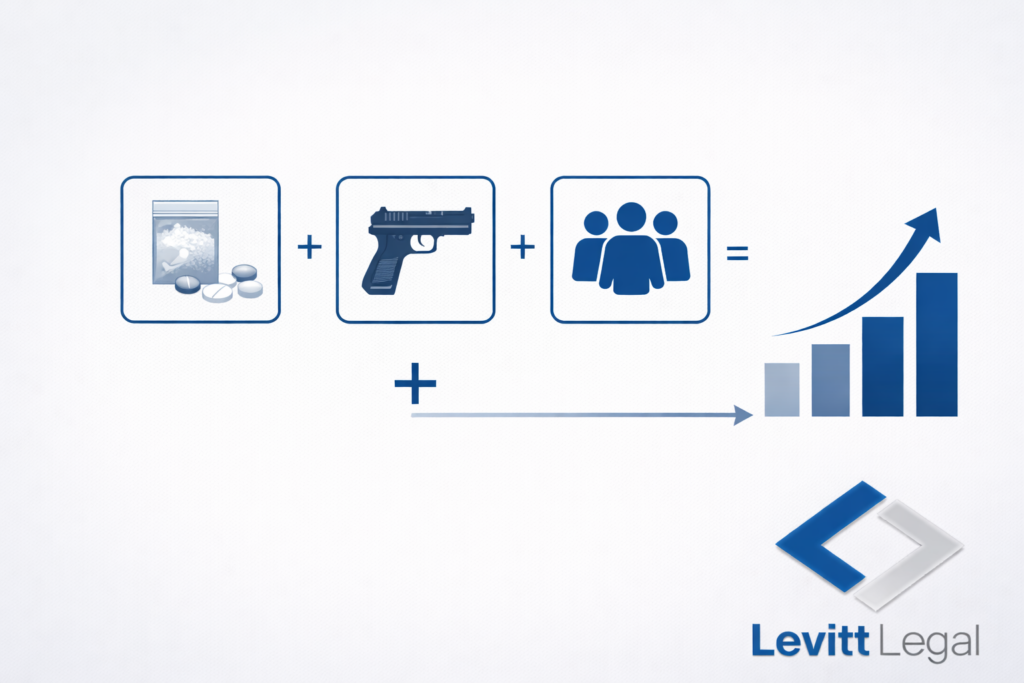
- Federal drug offenses often involve complex calculations based on drug quantity, role enhancements, and firearm enhancements, significantly impacting potential sentences.
- Mandatory minimum sentences impose strict limits on judicial discretion, though exceptions like the “safety valve” may apply.
- Proactive defense, including pre-indictment representation and strategic advocacy, is critical for mitigating federal sentencing exposure.
- A federal sentencing hearing is a formal proceeding where the Presentence Investigation Report (PSR) is reviewed, and defense counsel can challenge calculations and advocate for their client.
Why Federal Sentencing Is Different From State Courts
When you are accused of a federal crime, you step into a justice system with rules and consequences vastly different from those in Utah’s state courts. The federal government has a conviction rate exceeding 90%, and its approach to punishment is structured, severe, and allows for very little flexibility once a sentence is imposed. Understanding this distinction is the first critical step for anyone Facing Federal Charges.
The most significant difference lies in the framework that governs punishment. The federal system was designed to reduce sentencing disparities across the country, resulting in a highly regimented process. This is a stark contrast to many state systems, which can allow for more judicial discretion and rehabilitative options. A deep understanding of the Federal vs. State Criminal Defense systems is crucial, as the stakes are often much higher at the federal level.
No Parole and Stricter Standards
One of the harshest realities of the federal system is the absence of parole. This policy was eliminated by the Sentencing Reform Act of 1984. Sentences are determinate, meaning the time you are ordered to serve is, with limited exceptions for good behavior, the time you will actually spend in prison. This contrasts sharply with Utah’s state system, where parole boards often have the authority to release individuals before their maximum sentence is served.
This determinate sentencing model means that a 10-year federal sentence is effectively a 10-year sentence. The strict standards extend beyond just time served; they permeate every aspect of the case, from investigation by powerful federal agencies like the FBI and DEA to prosecution by Assistant U.S. Attorneys who have extensive resources at their disposal.
How Federal Sentencing Guidelines Work
At the heart of federal sentencing is the U.S. Federal Sentencing Guidelines, a complex grid system created by the U.S. Sentencing Commission. This framework was initially mandatory, but a landmark Supreme Court case changed the legal landscape. In United States v. Booker (2005), the Court ruled that the mandatory nature of the guidelines violated the Sixth Amendment right to a jury trial.
As a result, the guidelines are now considered advisory. However, this does not diminish their importance. Every federal judge in the U.S. District Court for the District of Utah must still calculate the guideline range and use it as the starting point for determining a final sentence. Deviating from this range requires a compelling and legally sound justification. For anyone facing federal prosecution, understanding how this calculation works is paramount.
The Sentencing Table: Offense Level and Criminal History
The sentencing guidelines operate on two primary axes: the “offense level” and the “criminal history category.”
- Offense Level: Every federal crime is assigned a base offense level. This number can increase or decrease based on dozens of “specific offense characteristics” and “adjustments.” Factors can include the amount of financial loss in Federal White Collar Crime Charges, the quantity of drugs in a trafficking case, the defendant’s role in the offense (e.g., leader or minor participant), and whether a firearm was involved.
- Criminal History Category: A defendant is assigned points based on the number and length of prior convictions. These points place the individual into one of six criminal history categories, with Category I being the least severe and Category VI being the most serious.
The intersection of the final offense level (vertical axis) and the criminal history category (horizontal axis) on the sentencing table produces a presumptive sentencing range in months. This range is what the judge uses as a benchmark.
Federal Drug Sentencing in Utah: Key Considerations
Federal drug offenses are among the most aggressively prosecuted crimes in Utah and carry some of the most severe penalties under the guidelines. The calculation for Drug Offenses is particularly intricate and often hinges on factors beyond the simple act of possession or distribution.
Drug quantity is a primary driver of the offense level. The guidelines have a detailed table that correlates specific weights of different controlled substances to offense levels. This means that the amount of narcotics involved in a case of conspiracy to distribute or drug trafficking can dramatically increase a potential prison sentence. Furthermore, the concept of “relevant conduct” allows prosecutors to include drugs from uncharged or even dismissed conduct in the sentencing calculation, as long as it was part of the same course of conduct or common scheme.
Enhancements for a defendant’s role in the offense or the presence of a weapon can add years to a sentence. If a firearm was possessed during a drug crime, a significant firearm enhancement can be applied. Similarly, if the court determines a defendant was a leader or organizer of the criminal activity, their offense level will increase substantially. Understanding these nuances is critical for anyone facing Federal Drug Charges.
What Are Mandatory Minimum Sentences and When Do They Apply?
Separate from the advisory guidelines are mandatory minimum sentences. These are rigid, statutory sentences established by Congress that a judge is required to impose upon conviction for certain offenses. They effectively create a floor for the sentence, and a judge generally has no discretion to go below it, regardless of the guideline calculation or other mitigating factors.
These sentences are most common in cases involving significant quantities of drugs and certain Federal Firearm Charges. For example, trafficking 500 grams or more of a mixture containing methamphetamine carries a 10-year mandatory minimum sentence. These laws can lead to disproportionately long prison terms that may not fit the specifics of the crime or the defendant’s background.
However, there are limited exceptions. The most common is the “safety valve” provision. This allows a judge to sentence below the mandatory minimum in certain low-level, non-violent drug cases if the defendant meets five strict criteria, including having a minimal criminal history and providing a complete and truthful debriefing to the government.
Strategies to Reduce Federal Sentences in Utah
Despite the rigid nature of federal sentencing, a skilled Federal Defense Attorney has several tools to advocate for a lower sentence. The key is proactive and strategic engagement with federal prosecutors and the court.
One of the most significant avenues for a sentence reduction is through providing “substantial assistance” to the government. This involves cooperating with prosecutors in the investigation or prosecution of another person. If the government determines the assistance was substantial, it can file a motion asking the judge to depart from the guidelines and any mandatory minimum.
Sentencing advocacy is another crucial strategy. This involves presenting a compelling argument for a “downward departure” or “variance” from the guideline range. A departure is a sentence outside the range based on specific factors within the guidelines themselves (e.g., diminished capacity). A variance is a sentence outside the range based on the broader sentencing factors outlined in 18 U.S.C. § 3553(a), which include the nature of the offense, the history and characteristics of the defendant, and the need for the sentence to provide just punishment. A strong defense involves challenging enhancements for drug quantity, role in the offense, or other factors that inflate the offense level. Even a small reduction in the offense level can result in a significantly shorter sentencing range.
The Federal Sentencing Hearing Process
The federal sentencing hearing is a formal court proceeding where the judge imposes the final sentence. This is the culmination of the entire legal process and a defendant’s last opportunity to argue for a fair and just outcome. A critical document at this stage is the Presentence Investigation Report (PSR).
The PSR is a comprehensive report prepared by a U.S. Probation Officer that details the offense, calculates the advisory guideline range, and provides a detailed history of the defendant’s personal life, family, education, and finances. The defense has the right to review this report and file written objections to any factual inaccuracies or incorrect guideline calculations. Resolving these objections is a central focus of the hearing.
At the hearing, both the prosecutor and defense counsel present their arguments. The defense can present character evidence, letters of support, and other mitigating information. The defendant also has the right of allocution, the right to speak directly to the judge and express remorse, explain their circumstances, or ask for leniency. Having an experienced attorney to guide you through this critical phase can make all the difference. To discuss your case, Speak With an Attorney who understands the Salt Lake City federal court.

Why Early Defense Strategy Significantly Impacts Sentencing
In the federal system, the path to sentencing begins long before a defendant ever sees a courtroom. The decisions made during the pre-indictment investigation, plea negotiations, and pre-trial phase have a profound impact on the final outcome. This is why securing experienced Federal Criminal Defense representation at the earliest possible moment is absolutely critical.
An effective early strategy involves engaging with federal prosecutors to shape the narrative of the case, potentially influencing charging decisions to avoid offenses with mandatory minimums. It involves scrutinizing the government’s evidence for constitutional violations that could lead to suppression, thereby weakening the prosecution’s leverage. It is about negotiating plea agreements that are structured to limit sentencing exposure, such as stipulating to facts that avoid certain enhancements.
Whether the case involves complex charges like Mail Fraud and Wire Fraud, Money Laundering, or serious drug trafficking, having a robust defense from the outset is the most powerful tool for mitigating a federal sentence. Your future depends on the strategic actions taken today. If you or a loved one is facing a federal investigation in Utah, please Contact Us for a free case review. Our firm provides a complete workup of every case, ensuring your rights are protected at every turn.
FAQs
How do federal sentencing guidelines in Utah differ from state sentencing guidelines?
Federal sentencing guidelines are established by the U.S. Sentencing Commission and are advisory, providing a structured framework for judges. Unlike state systems, the federal system does not have parole and generally imposes stricter standards and longer prison sentences with a determinate sentencing model.
What is the purpose of the Presentence Investigation Report (PSR) in a federal case?
The Presentence Investigation Report (PSR) is a comprehensive document prepared by a probation officer that details the offense, the defendant’s background, criminal history, and an analysis of applicable sentencing guidelines. It is a crucial document that the judge considers when determining the final sentence.
Can a federal judge in Utah deviate from the federal sentencing guidelines?
Yes, since the Supreme Court’s ruling in United States v. Booker (2005), federal sentencing guidelines are advisory, not mandatory. Judges are required to calculate and consider the guidelines but can depart or vary from the recommended range if they provide valid reasons.
What are “safety valve” provisions, and how can they impact mandatory minimum sentences?
“Safety valve” provisions are exceptions that allow federal judges to sentence certain first-time, non-violent drug offenders below an otherwise applicable mandatory minimum sentence. To qualify, defendants typically must meet specific criteria, including a truthful disclosure of information to the government.
Why is it crucial to hire a federal criminal defense attorney early in a federal case in Utah?
Early engagement with a federal criminal defense attorney in Utah is critical because strategic decisions made before indictment, during investigations, and during plea negotiations can significantly impact the eventual sentencing outcome. An experienced attorney can challenge evidence, negotiate with prosecutors, and advocate for sentence reductions from the outset.