
Key Takeaways
- Fourth Amendment protections apply in Utah drug cases, and evidence obtained through an unlawful search may be subject to suppression.
- Common scenarios leading to illegal searches include unlawful traffic stops, warrantless vehicle searches, defective search warrants, and improper home searches.
- Fourth Amendment protections apply in Utah drug cases, and evidence obtained through an unlawful search may be subject to suppression.
- Federal drug cases also adhere to strict suppression standards, and an attorney can challenge joint task force searches or wiretap evidence.
- If evidence is suppressed, prosecutors may need to reassess whether sufficient admissible evidence remains to proceed.
- If you believe a search was unlawful, avoid making statements and consult defense counsel to review the circumstances.
Why Search and Seizure Issues Can Dismiss Drug Charges
In many Utah drug cases, the prosecution’s case depends on evidence obtained during a search or traffic stop. The Fourth Amendment to the U.S. Constitution protects individuals from unreasonable searches and seizures, and law enforcement must follow those constitutional standards. If officers fail to comply with those requirements, the admissibility of the evidence may be challenged through a motion to suppress.
Courts apply the exclusionary rule to address constitutional violations. Under this rule, evidence obtained through an unlawful search may be excluded from trial. Defense counsel may file a motion to suppress to challenge the legality of the search and the resulting evidence. If the court grants the motion, the prosecution cannot rely on the suppressed evidence at trial. When critical evidence is excluded, prosecutors must evaluate whether sufficient admissible evidence remains to proceed. A suppression ruling can substantially influence how a Utah drug case is resolved.
Common Illegal Search Situations in Utah
Violations of your Fourth Amendment rights can occur in various situations, many of which may not seem obviously illegal at the moment. Recognizing these scenarios may provide a basis for filing a motion to suppress in a Utah drug case. From traffic stops on I-15 to searches of private homes in Salt Lake City, the rules of engagement for law enforcement are strict.
Unlawful Traffic Stops and Pretextual Stops
Traffic stops are a common setting for drug investigations. For a stop to be lawful, an officer must have reasonable suspicion that a traffic violation or other criminal activity has occurred. This standard requires specific, articulable facts rather than a generalized suspicion. If a stop lacks legal justification, evidence obtained as a result may be subject to suppression.
Officers may not rely on a minor traffic infraction solely to initiate a broader drug investigation without independent reasonable suspicion. When questioning expands beyond the basis for the stop without legal grounds, the encounter may be challenged as pretextual. Drivers also have the right to decline consent to a vehicle search.
Challenging Search Warrants and Warrantless Searches
In most cases, law enforcement needs a search warrant to legally search your home or property. A valid warrant must be based on probable cause, supported by a sworn affidavit, and must specifically describe the place to be searched and the items to be seized. Warrants that are overly broad, based on stale information, or lack sufficient probable cause can be challenged and invalidated.
While there are exceptions to the warrant requirement, such as items in “plain view” or certain vehicle searches, these exceptions have strict limits. An officer cannot, for example, search the trunk of your car during a routine traffic stop without probable cause or your consent. Any search that exceeds legal limits may result in the exclusion of the resulting evidence.
What Is a Motion to Suppress?
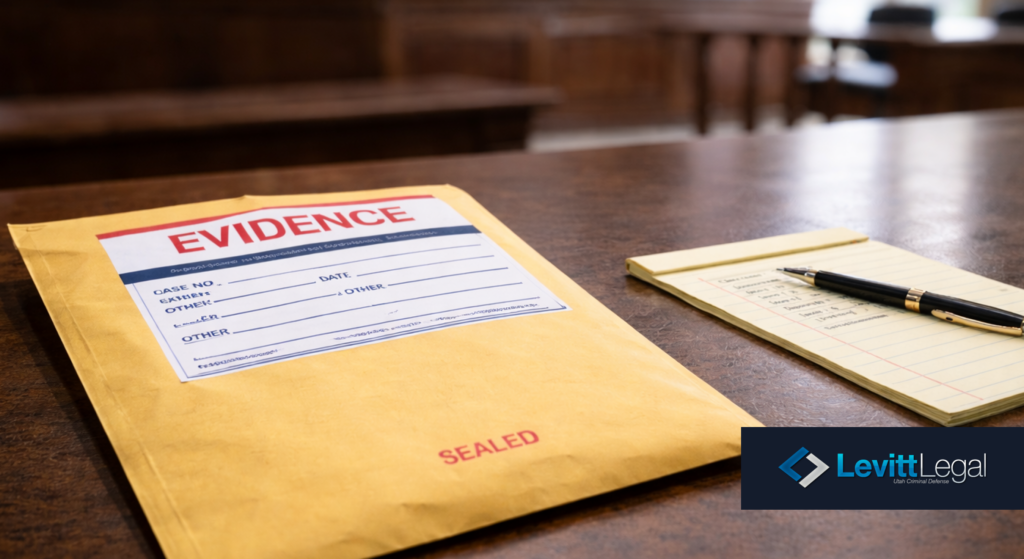
A “motion to suppress” is a formal, written request filed by a defense attorney asking a judge to exclude evidence from a trial because it was obtained illegally. This is the primary procedure used to address alleged Fourth Amendment violations in court. The motion details the specific ways in which law enforcement violated your constitutional protections, whether through an illegal traffic stop, a defective search warrant, or a warrantless search that did not meet any legal exception.
After the motion is filed, the court holds a suppression hearing. At this hearing, your attorney presents legal arguments, cross-examines the police officers involved, and may present evidence to show that the search was unlawful. The prosecutor will argue that the police conduct was legal. The judge then decides whether the evidence was obtained in violation of your rights.
If the judge grants the motion, the suppressed evidence is considered “fruit of the poisonous tree” and cannot be used by the prosecution. Suppressing key evidence may substantially limit the prosecution’s ability to proceed. Often, this leads to a dismissal of the charges or a significantly more favorable plea offer, making the motion to suppress one of the most powerful defense strategies in a Utah drug case.
Does This Apply to Federal Drug Cases?
Yes, the constitutional protections against illegal search and seizure apply just as strongly in federal court as they do in state court. Federal drug cases, which often involve agencies like the DEA or FBI and may stem from investigations by joint task forces, must adhere to the same strict Fourth Amendment standards.
Defense strategies in federal court frequently involve filing a motion to suppress evidence. These challenges can be even more complex, sometimes involving evidence obtained through federal wiretaps, GPS tracking devices, or extensive surveillance operations. An attorney must meticulously review the affidavits used to obtain these warrants and the methods used by federal agents to ensure they comply with both constitutional law and the Federal Rules of Criminal Procedure. If evidence is suppressed in a federal drug case, prosecutors must evaluate whether sufficient admissible evidence remains.
Can Charges Be Dropped If Evidence Is Suppressed?
In some cases, yes. When a motion to suppress is granted, the prosecution may be limited in the evidence it can present at trial. If the suppressed evidence is central to proving the offense, such as the controlled substances in a possession case, prosecutors must evaluate whether sufficient admissible evidence remains.
At that point, the prosecution may determine it cannot meet its burden of proof and choose to dismiss the charges. In other situations, reduced charges or negotiated resolutions may be considered. In illegal search and seizure cases, a suppression ruling can substantially influence how the case proceeds. Outcomes depend on the specific facts and the remaining admissible evidence.
What to Do Immediately If You Believe the Search Was Illegal
If you have been arrested and believe the police conducted an illegal search, the steps you take afterward can affect how your case proceeds. First and foremost, exercise your right to remain silent. Do not discuss the details of the search or the case with law enforcement. Anything you say can be used against you, even if you are trying to explain why you believe the search was improper.
Second, as soon as you can, write down every detail you can remember about the incident. Note the time, location, what the officers said, where they searched, and the sequence of events. These details can be invaluable for your attorney. You should consult defense counsel as soon as practical. An experienced lawyer can analyze the details of the stop and search to identify constitutional violations and begin building a defense.
Protect Your Rights with an Experienced Defense
At Levitt Legal, Darren Levitt personally reviews search procedures, warrant applications, and investigative conduct in Utah drug cases. The firm maintains a limited caseload to allow for thorough case preparation and direct communication. If your case involves a potential illegal search and seizure Utah drug case issue, contact Levitt Legal to discuss your legal options and next steps.
Frequently Asked Questions
What is the Fourth Amendment, and how does it protect me in a Utah drug case?
The Fourth Amendment protects individuals from unreasonable searches and seizures by the government. In a Utah drug case, it means law enforcement generally needs a warrant or probable cause to search your property or person for drugs. If this right is violated, evidence found may be inadmissible.
What does it mean for evidence to be “suppressed” in a drug case?
When evidence is suppressed, it means the court has deemed it inadmissible and cannot be used by the prosecution against you at trial. This usually occurs because the evidence was obtained through an illegal search or seizure, violating your constitutional rights.
Can an illegal traffic stop lead to my drug charges being dismissed in Utah?
Yes, if a traffic stop was initiated without reasonable suspicion or probable cause, any evidence of drugs found as a result of that unlawful stop could be suppressed. If the suppressed evidence is crucial to the prosecution’s case, your drug charges may be dismissed.
How can a defective search warrant impact my drug case?
A defective search warrant, such as one that is overbroad, lacks probable cause, or contains material misrepresentations, can render any evidence seized under that warrant inadmissible. Challenging a defective warrant is a key defense strategy that can lead to evidence suppression and potentially a dismissal of charges.
Why is it important to contact an attorney immediately after an illegal search?
Promptly contacting an experienced criminal defense attorney after an illegal search is crucial because they can quickly assess the legality of the police conduct, identify potential constitutional violations, and begin building a strong defense to challenge the evidence, potentially leading to its suppression.